Theatre Arts in Nigerian Education: Why It Matters

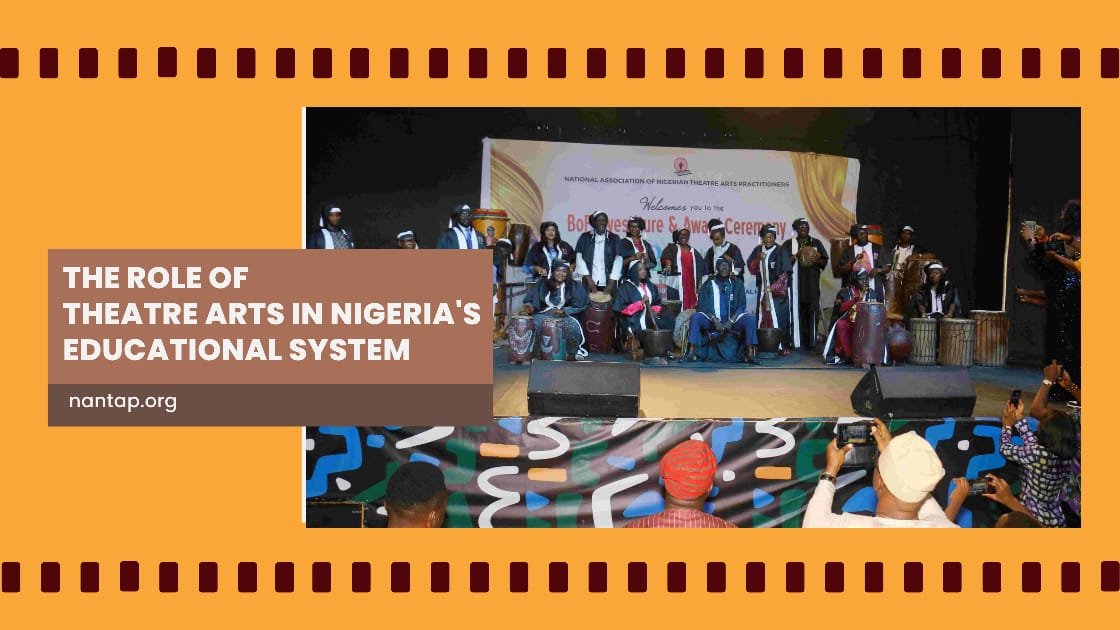
Theatre arts in Nigerian education have long occupied an uncomfortable position. It appears in the curriculum on paper, yet it is consistently sidelined in practice. Drama periods are shortened. School productions are underfunded. Students who show talent for performance are quietly steered toward what parents and teachers call more serious subjects. And yet, the evidence from decades of educational research and real-world outcomes tells a completely different story.
Theatre arts does not compete with academic rigour. In fact, it builds it. From critical thinking and communication skills to emotional intelligence, cultural awareness, and teamwork, drama education develops precisely the capabilities that Nigeria’s workforce, institutions, and civic life need most. Furthermore, it does this in a way that no other subject can replicate. It engages students through active, embodied, collaborative learning that conventional classroom instruction often fails to deliver.
This piece examines the current state of theatre arts in Nigerian schools, the evidence for its educational value, the challenges holding it back, and what NANTAP and other stakeholders are doing to change the equation.
The Current State of Theatre Arts in Nigerian Schools
Theatre arts appears in the Nigerian secondary school curriculum as a subject under creative and cultural education. At the tertiary level, the picture is stronger. Universities including the University of Lagos, University of Ibadan, Obafemi Awolowo University, and the University of Benin run established Theatre Arts departments with strong academic traditions.
However, the gap between what exists on paper and what happens in practice is significant. In many public secondary schools, drama is treated as a soft option, a subject for students who cannot excel elsewhere. School theatres, where they exist at all, are frequently dilapidated. Trained drama teachers are in short supply. Moreover, under examination pressure, schools routinely sacrifice arts subjects for STEM and commercial subjects that parents and teachers see as more employable.
The result is a generation of students who pass through the Nigerian educational system with little meaningful exposure to theatre arts. Consequently, they leave school with little understanding of what it offers them as a skill set, a career path, or a civic tool.
Nigeria has over 200 universities and thousands of secondary schools. Yet only a fraction offer theatre arts with the staffing, infrastructure, and institutional support needed to deliver it effectively.
What Theatre Arts Actually Teaches
The case for theatre arts in Nigerian education is not simply a cultural argument. It is also a practical one. Research consistently demonstrates that drama education develops a range of transferable skills that employers, institutions, and society need.
Communication and Public Speaking
Theatre trains students to speak clearly, listen actively, and communicate with presence and confidence. These skills do not develop automatically. They require practice, feedback, and the kind of structured exposure that drama classes and school productions provide. In a country where public communication at every level remains underdeveloped, from business pitches to civic engagement, this matters enormously.
Critical Thinking and Problem Solving
Performing a play requires students to analyse character motivation, interpret text, and make creative decisions under pressure. They must also respond in real time to what other performers do. As a result, drama develops precisely the kind of flexible, analytical thinking that rote learning cannot produce.
Emotional Intelligence and Empathy
When students inhabit characters whose experiences differ from their own, they develop the capacity to understand perspectives beyond their immediate reality. This is not a minor educational outcome. Moreover, in a country as diverse as Nigeria, with over 500 ethnic groups, multiple religious traditions, and deep regional differences, empathy is a civic necessity, not a luxury.
Teamwork and Collaboration
A theatre production cannot happen alone. Every production demands coordination between actors, directors, designers, and stage managers. Therefore, students who participate in drama learn, in the most practical terms possible, what collaboration actually requires and what it produces when it works.
Cultural Identity and Heritage
Theatre arts gives Nigerian students direct access to their own cultural heritage. From the masquerade traditions of the Yoruba and Igbo to the storytelling forms of the Hausa-Fulani, Nigerian performance tradition is extraordinarily rich. When schools teach theatre arts well, they do not simply teach students to perform. They teach them who they are.
The Akete Theatre Competition: Theatre in the Curriculum
One of the most concrete examples of this integration comes from NANTAP’s Lagos Chapter and the Lagos State Government. Together, they created the Akete Theatre Competition, an annual playwriting competition that accepts original, unpublished plays documenting Lagos history.
Crucially, the winning play does not simply receive a prize. Lagos State publishes it and incorporates it into the school literature curriculum. This means that Nigerian students study a play written by a Nigerian playwright, about Nigerian history, in a Nigerian classroom. Every educator and policymaker should recognise the significance of this achievement.
Furthermore, the competition provides a production platform through the Akete Theatre Festival. The festival stages selected plays before live audiences. Students who attend these productions encounter professional theatre in a context that makes it directly relevant to their own lives and communities.
This model, connecting playwriting, competition, publication, curriculum, and live production, is exactly the kind of integrated approach that Nigerian theatre arts education needs more of.
NANTAP’s Advocacy for Theatre in Education
NANTAP has consistently argued that theatre arts deserve a stronger, better-resourced place in the Nigerian educational system. This advocacy operates on multiple levels.
Policy Engagement
NANTAP engages with government ministries and educational institutions to make the case for theatre arts as a core subject. The association’s position is clear: drama education produces outcomes that the Nigerian educational system claims to value, including communication skills, civic awareness, and cultural literacy. However, conventional subject teaching alone fails to deliver them. Theatre arts fill that gap directly.
Capacity Building for Educators
Through its national conventions, workshops, and state chapter activities, NANTAP provides training for theatre arts educators and practitioners. The 2024 National Delegates Convention, for instance, included workshops on directing, scriptwriting, and digital theatre innovations. These skills feed directly into teaching quality at every level of the educational system.
Student Engagement
NANTAP chapters organise World Theatre Day celebrations that regularly include students from higher institutions alongside professional practitioners. In doing so, NANTAP creates visible pathways from student interest to professional practice, making the educational journey in theatre arts legible and achievable.
The Challenges That Must Be Addressed
Despite the clear case for theatre arts in Nigerian education, several structural challenges prevent the subject from reaching its potential.
Infrastructure is the most visible problem. Many Nigerian schools lack the basic performance spaces needed to teach drama effectively. A drama class without a stage, without lighting, without space to move is a significantly impoverished learning experience. Capital investment is therefore necessary, yet neither schools nor state governments have consistently prioritised it.
Teacher training is equally critical. Drama is a specialist subject that requires specialist teaching. However, many Nigerian schools assign drama to teachers whose primary subject is something else entirely. As a result, teachers deliver the subject without the depth, technique, or enthusiasm that produces real educational outcomes. Investment in drama teacher training programmes, in partnership with institutions like NANTAP and university theatre departments, is the most direct way to address this gap.
Finally, the examination and assessment framework needs reform. Drama should reward the skills it actually develops, including performance, creative decision-making, and collaborative production. Written papers alone reduce a practical subject to an academic exercise and fail the students who need it most.
What a Stronger Theatre Arts Education Looks Like
The goal is not simply more drama classes. Instead, it is a genuinely integrated approach that connects schools, professional practitioners, cultural institutions, and government in a coherent framework. Specifically, this means:
- A mandatory, adequately resourced drama curriculum in all Nigerian secondary schools
- Trained, specialist drama teachers in every school with a performing arts programme
- Functioning performance spaces, even simple and flexible ones, in every school
- Annual school theatre festivals at local, state, and national levels
- Partnerships between schools and NANTAP state chapters for mentorship, workshops, and production support
- A curriculum that includes Nigerian plays by Nigerian playwrights, as the Akete model demonstrates is possible
- Assessment frameworks that evaluate performance and creative skill alongside written knowledge
None of these is beyond Nigeria’s capacity. In fact, several are already happening in isolated pockets. What is missing is the institutional will to make them standard rather than exceptional.
Final Thoughts
Theatre arts in Nigerian education is not a luxury. It is an investment in the human capabilities that Nigeria needs most, communicators, critical thinkers, empathetic citizens, and culturally literate professionals who understand who they are and where they come from.
NANTAP’s advocacy, the Akete Theatre Competition model, and the work of dedicated drama educators across the country all demonstrate that the infrastructure for change exists. Policymakers, school administrators, parents, and the broader public must now recognise what theatre arts education actually produces. They must fund it, support it, and demand it.
The stage is one of the oldest classrooms in human history. It is time Nigeria treated it that way.