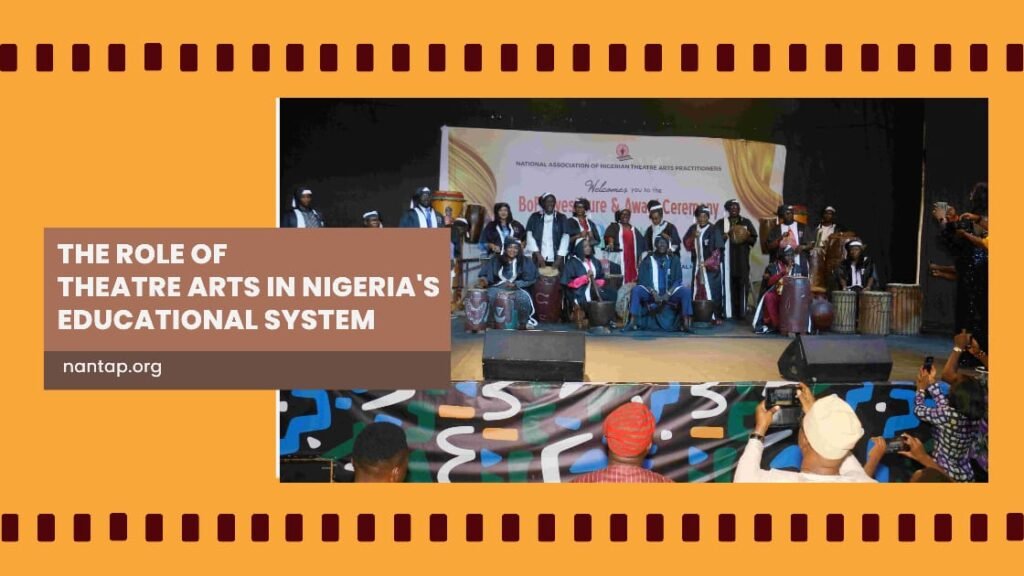
How to Build a Career in Theatre Arts in Nigeria: A Step-by-Step Guide


Theatre arts in Nigeria is no longer a passion project reserved for the bold few willing to risk it all on stage. Today, it is a legitimate profession that feeds families, builds legacies, and contributes billions to Nigeria’s GDP.
Yet, many young Nigerians who feel the pull of the stage still ask the same question: how do I actually make this a career?
This guide answers that question directly. Whether you are a student trying to choose a path, a graduate wondering what comes next, or a passionate performer who wants to go professional, this step-by-step breakdown covers everything you need to know from training and education to joining the right associations, building your network, and getting paid for your craft.
1. Understand What a Theatre Arts Career Actually Looks Like
Before taking any steps, you need to expand your definition of a theatre arts career. Most people think it ends at acting, it does not. The performing arts ecosystem in Nigeria is wide, and your entry point could be in any of the following roles:
- Actor (stage, screen, television, radio)
- Theatre director or assistant director
- Playwright and scriptwriter
- Stage manager and production manager
- Set designer, lighting technician, and costume designer
- Voice-over artist and spoken word performer
- Theatre educator and drama therapist
- Arts administrator, event producer, and festival coordinator
- Film and documentary director (with roots in theatre)
Nigeria’s creative economy has room for all of these. The National Association of Nigerian Theatre Arts Practitioners (NANTAP) alone represents practitioners across 27 states, spanning every one of these specialisations. Knowing which lane interests you most will determine how you train, where you study, and who you connect with.
2. Get Formal Training and Education
While raw talent can open doors, formal training is what keeps them open. Nigeria has several universities and polytechnics offering accredited Theatre Arts programmes. These include:
- University of Lagos (UNILAG) — Department of Creative Arts
- University of Ibadan (UI) — Department of Theatre Arts
- Obafemi Awolowo University (OAU), Ile-Ife — Theatre and Performing Arts
- University of Benin (UNIBEN) — Theatre Arts Department
- Nnamdi Azikiwe University (UNIZIK) — Theatre and Film Studies
- Ahmadu Bello University (ABU), Zaria — Department of Performing Arts
A Bachelor of Arts in Theatre Arts or Performing Arts gives you grounding in acting technique, dramatic theory, stagecraft, scriptwriting, and directing.
For those who want to specialise further, postgraduate options in Film Studies, Arts Administration, or Creative Economy are increasingly available.
If a full university degree is not your path right now, consider vocational training, acting schools, and workshops offered by institutions like NANTAP, the Society of the Performing Arts in Nigeria (SPAN), and private theatre companies.
Many professional practitioners built careers through intensive workshop training combined with real-world experience.
3. Join NANTAP — Nigeria’s Premier Theatre Practitioners Body
One of the most important steps any aspiring theatre professional in Nigeria can take is to formally register with the National Association of Nigerian Theatre Arts Practitioners (NANTAP). This is not just a membership card – it is professional recognition, access, and protection all in one.
Here is what NANTAP membership offers:
- Official recognition as a professional theatre arts practitioner in Nigeria
- Access to capacity-building workshops, masterclasses, and national conventions
- Advocacy support for your intellectual property and performers’ rights
- Networking opportunities with over 27 state chapters across the country
- Representation in government dialogue and creative industry policy conversations
- Participation in flagship events like the National Delegates Convention and the Akete Theatre Festival
- Collaboration opportunities with international bodies including the International Theatre Institute (ITI) and International Federation of Actors (FIA)
NANTAP has been at the forefront of professionalising theatre in Nigeria since 1990. Joining the association connects you to a network of practitioners, mentors, and industry stakeholders who can accelerate your career in ways that individual hustle simply cannot match.
4. Build Your Portfolio and Stage Presence
In theatre, your body of work is your currency. From the very beginning, document everything. Auditions, rehearsals, performances — record them, photograph them, and keep records of every production you have been part of.
Your portfolio should include:
- A professional headshot (updated regularly)
- A showreel or video clips of stage and screen performances
- A resume listing productions, roles, directors, and companies
- Testimonials or letters of recommendation from directors and producers
- Links to any digital coverage — newspaper features, social media mentions, reviews
In today’s creative economy, your online presence matters as much as your stage presence. Use platforms like Instagram, TikTok, YouTube, and LinkedIn to showcase your work, share your process, and build an audience.
Nigerian theatre practitioners who have built strong digital presences have attracted brand partnerships, film auditions, and international opportunities that traditional routes could not provide.
5. Audition Aggressively and Say Yes to Small Rooms
Every major career in Nigerian theatre started in a small room. Community theatre productions, university showcases, church drama groups, independent short films — these are not stepping stones to dismiss. They are where you build the muscle, make the mistakes, and attract the attention of the right people.
Practical advice for the audition process:
- Prepare two contrasting monologues — one classical and one contemporary — and keep them fresh
- Follow Nigerian theatre companies, production houses, and casting directors on social media for audition announcements
- Attend open auditions even when the role does not seem perfect — every room is a networking opportunity
- Be punctual, professional, and coachable — directors remember how you behave more than your single audition
- Join local theatre groups affiliated with NANTAP state chapters to get consistent stage time
6. Develop Business Skills Alongside Artistic Skills
This is the part most theatre training does not teach and it is where many talented practitioners stall. A career in theatre arts is also a business. You need to understand how the industry economy works.
Key business skills for theatre practitioners:
- Contract literacy — understanding performance agreements, royalty structures, and exclusivity clauses
- Copyright and intellectual property — knowing your rights as a creator or performer (NANTAP actively advocates for this with the Nigerian Copyright Commission)
- Personal branding — positioning yourself in the market with clarity and consistency
- Financial management — managing irregular income, saving during busy seasons, and investing in your career
- Proposal writing — pitching productions, applying for arts grants, and writing creative industry proposals
NANTAP’s national conventions and workshops frequently cover these areas. The 2024 National Delegates Convention, for instance, included workshops on scriptwriting, directing, stage design, and digital theatre innovations — all skills that translate directly to a more sustainable career.
7. Explore Funding and Grants for Theatre Practitioners
Funding is one of the biggest barriers practitioners cite, but it is not as scarce as it seems. Once you know where to look and how to apply, opportunities open up.
Sources of funding and support for Nigerian theatre practitioners:
- NANTAP advocacy grants and state government cultural funding
- The Nigeria Prize for Creative Arts (NLNG) — including the inaugural documentary filmmaking award worth $20,000
- Ford Foundation and MacArthur Foundation creative arts grants (NANTAP has existing relationships with both)
- EU/ECOWAS Creative Service Sector Trade Treaty programmes
- Lagos State Government arts and culture development initiatives
- Corporate sponsorships from institutions like Leadway Assurance, which has a long-standing relationship with NANTAP
The key to accessing funding is documentation. Keep a proper record of your work, your impact, and your professional affiliations.
A registered NANTAP member with an active portfolio is far better positioned to receive institutional support than an unregistered practitioner working in isolation.
8. Think Long-Term: Teaching, Producing, and Legacy Building
Sustainable theatre careers in Nigeria — and globally — are built by practitioners who diversify over time. Acting is one lane; producing, directing, teaching, and arts administration are others that often provide stability while keeping you rooted in the craft.
Consider these long-term paths:
- Theatre education — teaching in secondary schools, universities, or running private acting studios
- Artistic direction — leading your own theatre company and building a production house
- Playwriting and publishing — contributing to Nigeria’s literary tradition with original dramatic works
- Arts administration — working with cultural institutions, festivals, and government agencies to develop the sector
- International collaboration — representing Nigeria at global theatre forums through NANTAP’s ITI and FIA affiliations
The practitioners who have built the most enduring careers in Nigerian theatre did not just perform — they also built institutions, trained the next generation, and contributed to the body of knowledge that defines the profession today.
Final Thoughts
Building a career in theatre arts in Nigeria requires a combination of talent, training, professional affiliation, business sense, and persistence. The industry is growing and growing fast.
Nigeria’s creative economy contributed over ₦730 billion to the GDP in 2020 and continues to expand, with organisations like NANTAP pushing government, corporates, and institutions to create better conditions for practitioners at every level.
The stage is set. The question is whether you are ready to take your place on it not just as a performer, but as a professional.Join NANTAP, invest in your training, build your network, and get to work. The Nigerian theatre industry needs exactly what you have.