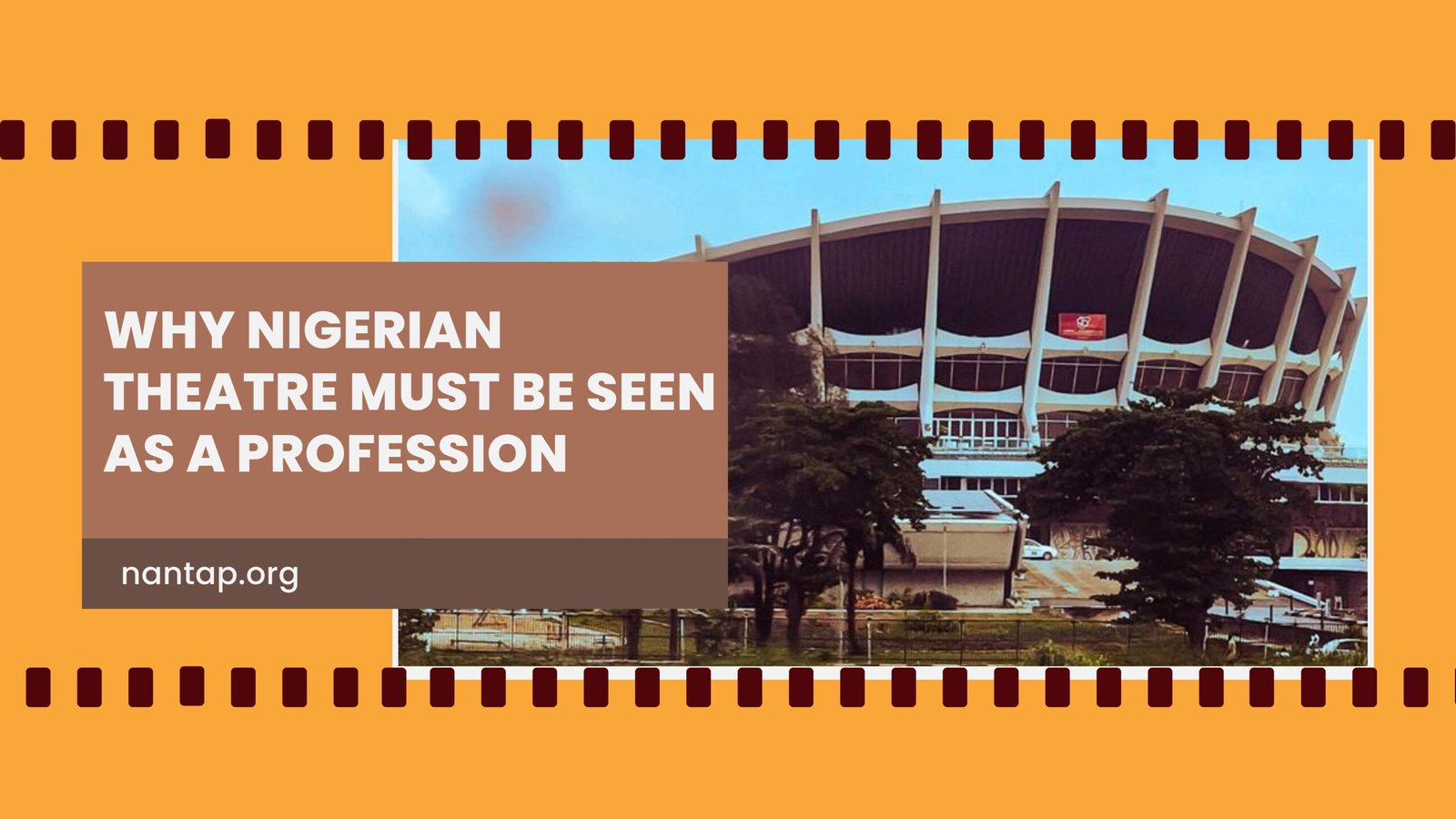
Why Nigerian Theatre Must Be Seen as a Profession

For years, theatre in Nigeria has carried the label of passion. It has been seen mostly as a creative pursuit for those who love the stage, not necessarily those who want a stable career. But theatre is much more than a hobby.
It’s a profession that shapes culture, educates communities, and contributes to the nation’s creative economy. The sooner we begin to treat it as such, the stronger the industry will become.
Across the country, thousands of actors, directors, playwrights, and stage designers pour their hearts into productions that tell the Nigerian story. These are professionals who train, rehearse, and perform with the same dedication as anyone in medicine, law, or engineering.
Yet, many still struggle to be taken seriously. Too often, theatre practitioners face late payments, poor working conditions, and limited access to financial or legal support. This is not because they lack skill , but because society has not fully recognized theatre as a structured career path.
The truth is, professionalism is what gives value to any field. Once clear systems are in place — training standards, ethical guidelines, and fair compensation — the public begins to view the work differently. It’s not enough to applaud after a show; the people behind that performance deserve the same respect and recognition given to other professionals.
That’s exactly what NANTAP is working to change. The National Association of Nigerian Theatre Arts Practitioners has been a leading voice in repositioning theatre as a serious profession.
Through programs focused on capacity building, advocacy, and member welfare, NANTAP is creating a structure where creativity meets accountability. Practitioners are not just performing; they are growing careers backed by professional support.
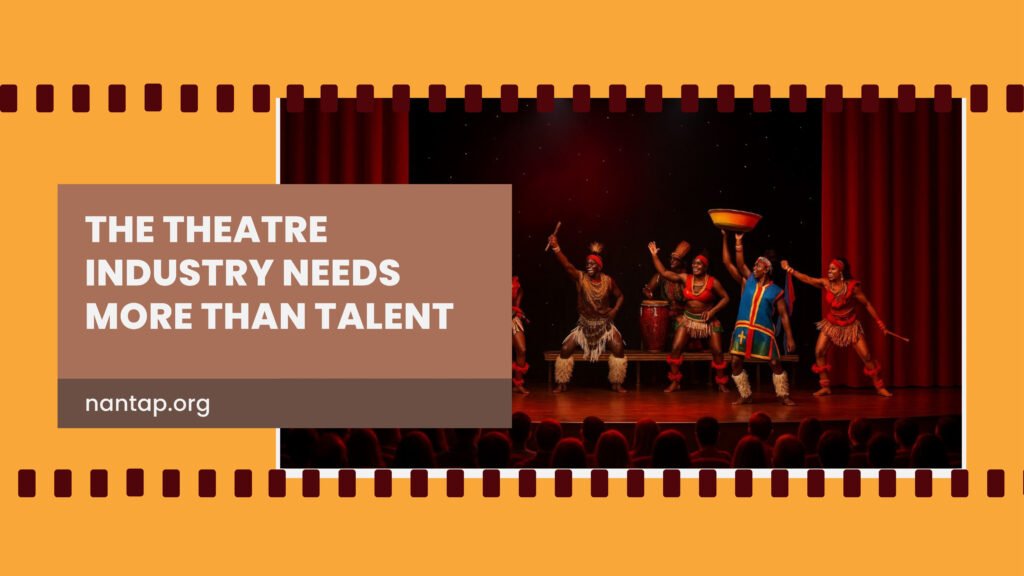
ALSO READ: The Theatre Industry Needs More Than Talent
To make theatre a recognized profession, we need systems that protect and empower practitioners. This means access to contracts that guarantee payment, insurance for those who work in physically demanding environments, and legal frameworks that prevent exploitation. It also means ensuring that theatre education translates into real opportunities, not just certificates.
The good news is that progress is happening. Theatre festivals, workshops, and creative hubs across Nigeria are now producing a new generation of professionals who understand both the art and the business of performance.
With support from organizations like NANTAP, more practitioners are learning to brand themselves, build networks, and collaborate across borders. This shift is vital because the future of theatre in Nigeria depends not only on talent but also on professionalism.
When theatre is seen as a profession, it attracts investors and audiences who believe in its potential. It becomes easier to secure funding, partnerships, and sponsorships. Productions last longer, and practitioners can focus on excellence instead of survival. This professional approach also helps elevate the country’s global image, showing that Nigerian theatre is not just passionate but world-class.
We’ve already seen the difference in industries that have embraced structure. The Nigerian film industry, for example, became a global force only after it began formalizing production processes, creating guilds, and valuing its professionals. The same can happen for theatre, but it starts with changing perception, from within and outside the community.
Theatre is not a pastime; it is work that demands creativity, discipline, and expertise. Each performance contributes to the nation’s cultural preservation and artistic legacy. When we treat it with the respect it deserves, we don’t just uplift the practitioners but we also uplift Nigeria’s cultural identity.
So, the next time you watch a stage play or meet someone who calls themselves a theatre artist, remember, they are not just following a dream. They are practicing a profession that has the power to entertain, educate, and transform.
And through NANTAP’s vision, that profession is gaining the structure and recognition it has long deserved.