Is Nigeria Losing Her Stage Culture?

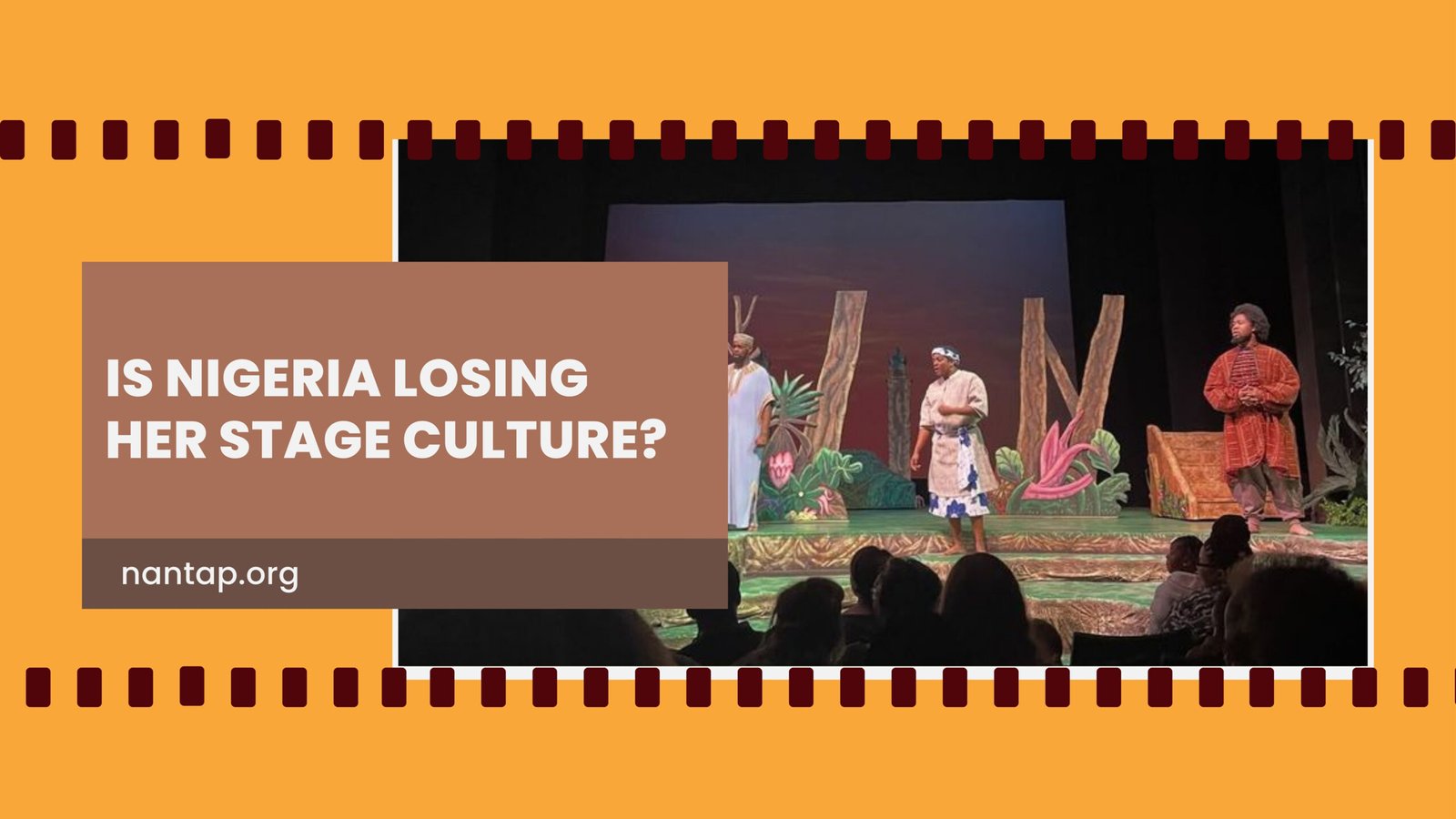
Once upon a time, the sound of live drums, stage lights, and crowd cheers filled theatres across Nigeria. People dressed up to see plays that reflected their lives. Stories of love, struggle, and triumph told through music, dance, and dialogue. Theatre wasn’t just entertainment; it was an event, a shared experience, and a proud part of our national culture.
Today, that scene feels quieter. Digital screens have replaced open stages, and many theatres are struggling to stay open. While film and television continue to thrive, live theatre is fighting for space in a fast-paced, tech-driven world.
So, it’s fair to ask: are we losing our stage culture?
The decline didn’t happen overnight. Over the years, limited funding, weak infrastructure, and lack of proper management have made it difficult for theatre to grow. Many performance spaces were left without maintenance.
Talented practitioners turned to other jobs just to survive. The passion remained, but the structure weakened. And without structure, even the most vibrant culture can start to fade.
Yet, theatre is one of the oldest and most powerful forms of storytelling. It connects people in a way no other medium can. When actors perform live, they create energy that you can feel; laughter, tension, emotion. It’s real, raw, and unforgettable. That shared experience between performer and audience is what defines stage culture. Losing that would mean losing a vital part of who we are as Nigerians.
Reviving theatre is not just about bringing back performances; it’s about rebuilding the entire ecosystem around it. That’s where organizations like NANTAP are making a difference. The National Association of Nigerian Theatre Arts Practitioners is working to restore structure and dignity to the craft.
Through training, advocacy, and partnerships, NANTAP is helping practitioners access the resources they need to keep theatre alive; from funding to legal guidance and capacity-building programs.
ALSO READ: Why Nigerian Theatre Must Be Seen As A Profession
Theatre also needs the audience to return. In today’s world, people are drawn to quick content and short attention spans, but the magic of live performance can’t be replaced by a screen.
When we watch a play, we are reminded of our shared humanity. We laugh together, cry together, and reflect on our society together. It’s a form of storytelling that builds empathy and unity: two things our world desperately needs more of.
To keep theatre alive, we need to make it accessible again. This means investing in proper venues, encouraging school theatre clubs, and supporting community productions.
It means treating stage performances as cultural events worth attending and supporting. When corporate organizations, government bodies, and individuals rally behind theatre, they are not just funding art but also preserving history.
The stage is where Nigerian stories began. Before Nollywood, before streaming platforms, there were actors performing under open skies, telling tales that carried our identity and values. Those stories deserve to continue. Every generation should experience the magic of live performance — the connection, the emotion, and the pride of seeing Nigerian creativity come alive right in front of them.
We may be living in a digital age, but that doesn’t mean theatre must disappear. Instead, it should evolve. Modern productions can blend stage performance with technology, lighting, and storytelling innovations to attract new audiences.
Collaboration between traditional theatre and modern media can open new doors for the industry. And with NANTAP’s guidance, more practitioners can learn how to adapt while staying true to the art form.
The question isn’t whether we still have talent because we do. The question is whether we still value the space where that talent belongs. Reviving our stage culture is not a nostalgic dream; it’s a necessary mission. Because when we keep the stage alive, we keep our stories alive.
Nigerian theatre has survived challenges before, and it will again. But this time, it will take collective effort : from practitioners, audiences, sponsors, and policymakers. If we want the next generation to know what live theatre feels like, we have to protect and invest in it today.